How to Analyze Blockchain Transactions Like a Pro
To analyze blockchain transactions like a pro, start by understanding their lifecycle, including initiation, validation, and confirmation stages. Use specialized tools that offer address clustering and pattern detection to track transaction flows efficiently. Focus on key data such as timestamps, amounts, and involved addresses to interpret behaviors clearly. Employ tracing techniques and clustering to link related transactions and identify anomalies or fraud. Applying these methods sharpens your insight into transaction dynamics and network integrity, setting the stage for deeper exploration.
Understanding Blockchain Transaction Basics
A blockchain transaction represents the transfer of digital assets or information between participants within a blockchain network.
To grasp blockchain fundamentals, you need to understand the transaction life cycle, which includes initiation, validation, and confirmation stages.
When you initiate a transaction, it’s broadcasted to the network, where nodes validate it against set rules.
Once validated, the transaction is grouped into a block and added to the blockchain through consensus mechanisms. This process guarantees security and transparency.
Tools and Platforms for Transaction Analysis
While analyzing blockchain transactions manually can be challenging due to the complexity and volume of data, specialized tools and platforms simplify the process.
Transaction analysis tools help you track and interpret transaction flows efficiently, offering features like address clustering and pattern detection.
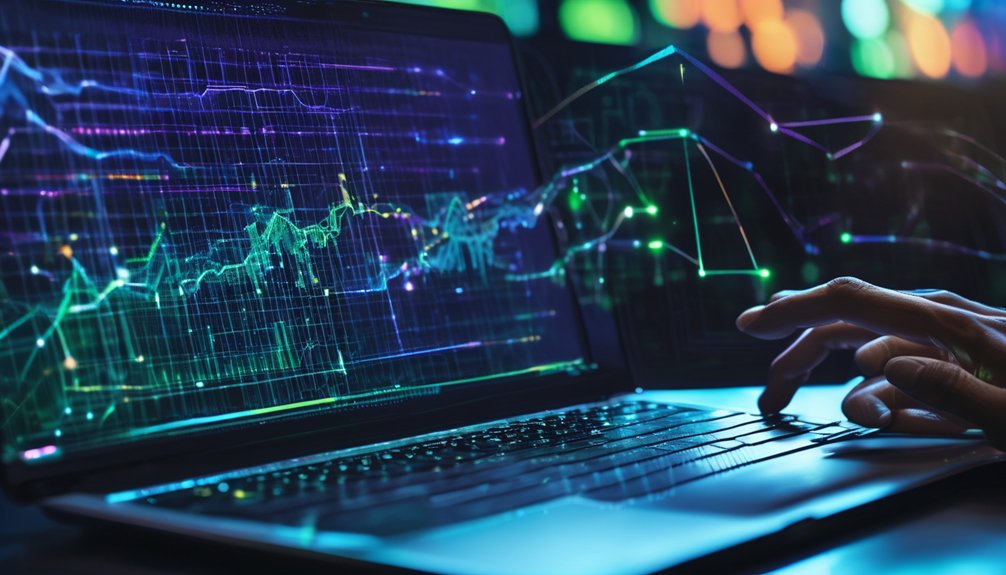
Blockchain analysis platforms provide extensive dashboards, enabling you to visualize data and identify trends quickly.
Using these resources, you gain clearer insights without sifting through raw data.
Selecting the right transaction analysis tools and blockchain analysis platforms empowers you to navigate blockchain data with greater freedom and accuracy, streamlining your workflow and enhancing your overall understanding of transaction behavior.
Identifying and Interpreting Key Transaction Data
Understanding how to identify and interpret key transaction data builds on the insights gained from using analysis tools and platforms.
You’ll want to focus on transaction patterns that reveal regularities or anomalies within the blockchain. These patterns help you understand the flow and intent behind transactions.
Using data visualization techniques, you can transform complex raw data into clear graphs or charts, making interpretation easier. Pay attention to timestamps, amounts, and addresses involved, as these attributes provide context.
Techniques for Tracing and Linking Transactions
Because blockchain transactions are recorded publicly and immutably, you can trace and link them by following the flow of digital assets between addresses.
Start by mapping transaction flows to observe how funds move across the network. Analyze wallet interactions to identify patterns, such as repeated transfers or common counterparties.
Use clustering techniques to group addresses controlled by the same entity, enhancing your understanding of transaction relationships. Visual tools can help illustrate these connections clearly.
Applying Analysis to Detect Fraud and Anomalies
As you apply transaction analysis to detect fraud and anomalies, you focus on identifying unusual patterns that deviate from typical blockchain behavior.
Fraud detection relies on spotting transactions that don’t fit established norms, such as sudden large transfers or repeated microtransactions. Anomaly recognition involves comparing current data against historical trends, flagging irregularities that could indicate malicious activity.
By monitoring these deviations, you maintain the integrity of blockchain networks without compromising user freedom. Utilizing automated tools alongside your critical judgment enhances accuracy and efficiency.
This approach empowers you to safeguard the system while respecting its decentralized, open nature.
Frequently Asked Questions
How Does Blockchain Transaction Speed Vary Across Different Networks?
You’ll find transaction speed varies widely across networks; some prioritize quick confirmations, while others focus on security. When you do a network comparison, pick one that balances speed and freedom to suit your needs perfectly.
What Are the Legal Implications of Tracing Blockchain Transactions?
You need to navigate legal compliance carefully when tracing blockchain transactions, as regulatory challenges can arise. Staying informed helps you protect your freedom while respecting laws, ensuring your analysis doesn’t cross legal boundaries or invite scrutiny.
Can Blockchain Transaction Analysis Protect User Privacy?
You can protect privacy preservation by using transaction obfuscation techniques, ensuring your blockchain activities stay hidden. These tools help maintain your freedom while making it tougher for others to trace your transactions or identify you.
How Do Smart Contracts Affect Transaction Analysis?
Smart contract functionality automates transactions, making analysis trickier since actions trigger automatically without direct user input. You’ll need to understand contract code and transaction automation to trace funds and maintain your freedom confidently.
What Role Do Miners Play in Transaction Validation?
Miners validate transactions by confirming and adding them to the blockchain. They’re motivated by miner incentives, mainly transaction fees and block rewards, ensuring your transactions are secure and the network remains free from tampering.