Crypto Mining Vs Staking: Which Pays More?
Crypto mining and staking both generate income but differ greatly. Mining requires costly hardware and high energy use, with earnings affected by coin value, network difficulty, and electricity costs. Staking involves locking up coins to validate transactions, with lower expenses and rewards linked to the staked amount and market fluctuations. Mining can offer consistent returns if managed well, while staking’s profitability depends on protocol rules and token price changes. Exploring these factors can help you find the best fit for your goals.
How Crypto Mining Generates Income
Crypto mining generates income by verifying and adding transactions to a blockchain through solving complex mathematical problems.
You earn rewards in cryptocurrency for each block you successfully mine, which depends on mining profitability influenced by network difficulty and coin value.
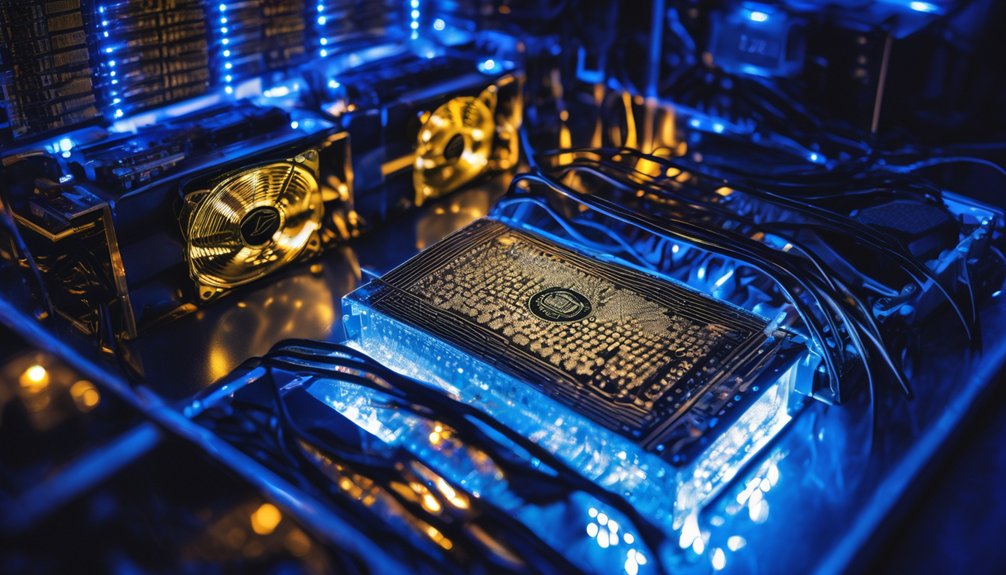
However, you must carefully consider your hardware investment since efficient mining requires powerful, specialized equipment.
The cost and energy consumption of mining rigs directly impact your potential profits.
To compare the two with real inputs, use the Bittensor staking and mining calculator for TAO yields after validator take, or the power price check to see what mining rigs earn at your electricity price today.
Understanding the Mechanics of Staking
While mining relies on powerful hardware to validate transactions, staking offers an alternative method that depends on holding and locking up cryptocurrency.
When you stake coins, you commit them to support network validation, which helps secure the blockchain and confirm new transactions. In return, you earn staking rewards proportional to the amount you stake and the time your assets remain locked.
This process reduces the need for energy-intensive equipment, offering a more accessible way to participate in network security. By understanding these mechanics, you can decide if staking aligns with your goals for financial freedom and passive income.
Comparing Profitability and Risks
Although both mining and staking can generate returns, their profitability and risks differ markedly based on factors like market conditions, initial investment, and operational costs.
Mining typically requires higher upfront costs for hardware and consumes significant electricity, which impacts profitability.
Staking demands less operational expense but exposes you to market volatility, as the value of staked tokens can fluctuate.
Mining profits can be steady if you manage costs well, while staking rewards depend on network rules and token price changes.
Understanding these differences helps you choose a strategy that balances potential earnings with acceptable risk for your financial freedom.
Factors Influencing Earnings in Mining and Staking
Since earnings from mining and staking depend on different mechanisms, understanding the key factors that influence them is essential.
When mining, your hardware efficiency directly impacts energy consumption and processing power, which affects profitability. For staking, network rewards vary based on the total amount staked and protocol rules.
Other factors include:
- Cryptocurrency price volatility, influencing overall returns
- Difficulty levels in mining or staking, affecting reward frequency
- Transaction fees, which can supplement or reduce earnings
- Initial investment and ongoing maintenance costs
Knowing these elements helps you make informed choices that align with your financial freedom goals.
Frequently Asked Questions
What Initial Investment Is Required for Crypto Mining Versus Staking?
You’ll face higher initial costs with mining—buying hardware and electricity. Staking requires less upfront investment, just buying coins. Both offer potential returns, but staking suits you if you want freedom without heavy equipment or energy bills.
Are There Tax Implications Unique to Mining or Staking Profits?
Yes, you’ve got tax obligations for both mining and staking profits. You’ll need to report your earnings accurately to stay free from legal trouble, keeping your crypto journey smooth and your profits secure.
Can I Mine and Stake the Same Cryptocurrency Simultaneously?
Yes, you can run simultaneous operations for mining and staking the same cryptocurrency if the network supports it. This way, you can maximize mining rewards while enjoying staking benefits, giving you more freedom to earn.
How Does Energy Consumption Differ Between Mining and Staking?
You’ll find staking far more energy efficient than mining, which demands massive electricity and harms the environment. Staking lets you support freedom with minimal environmental impact, freeing you from high energy costs and ecological worries.
What Hardware or Software Is Recommended for Beginners in Mining or Staking?
You should start with user-friendly mining software like EasyMiner and choose staking platforms such as Binance or Kraken. These tools empower you to mine or stake efficiently while maintaining your freedom and control over crypto assets.