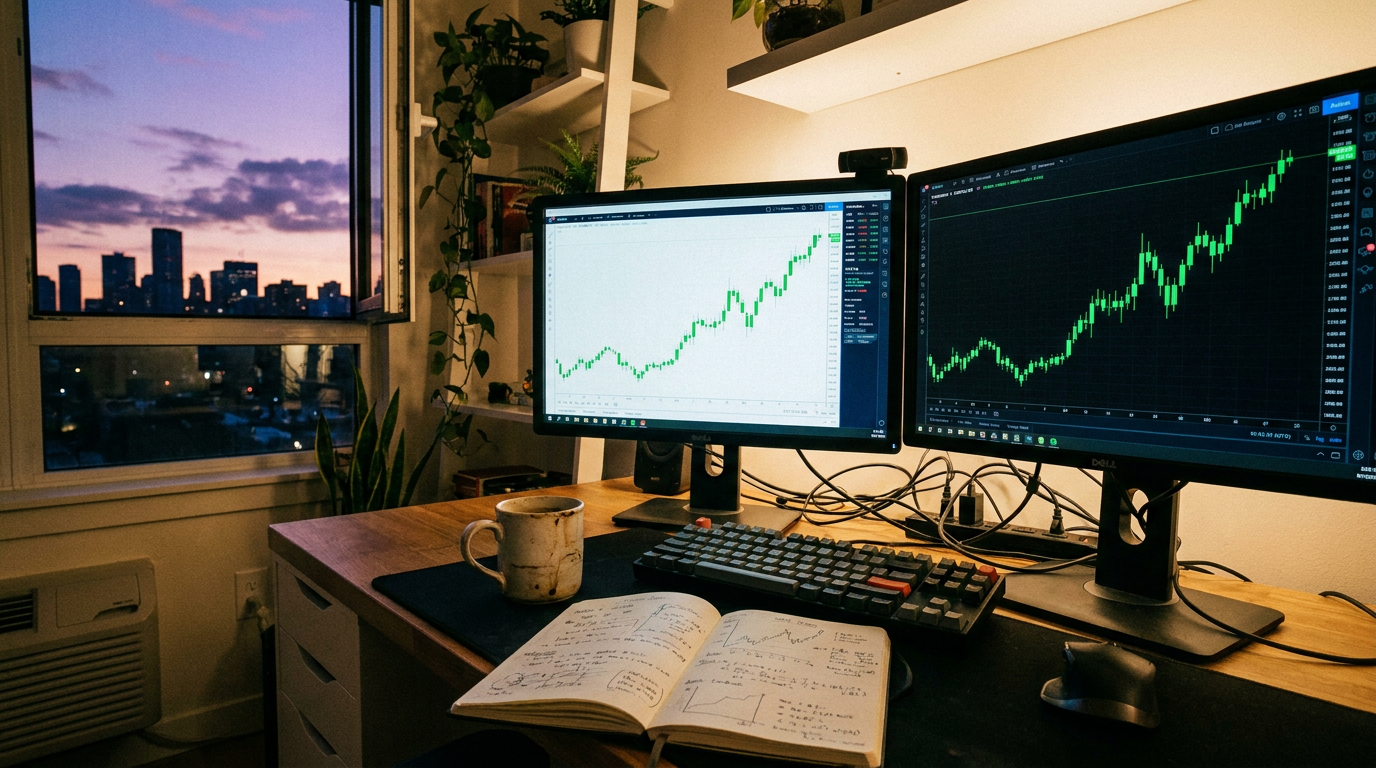
Why Is Dogecoin Rising Again? The Pattern Behind Its Rallies
Dogecoin rises again when three conditions overlap: a stretch of flat, low-volume price action, a fresh sentiment trigger, and a crypto market that is already leaning risk-on. The move almost never starts with news about Dogecoin itself.
That is why it feels sudden. The coin sits quiet for weeks, liquidity thins out, then a burst of attention hits a market with very few sellers positioned for it.
The Rally Shape That Keeps Repeating
A Doge rally tends to run through the same stages. It opens with the quiet drift, where volume falls off and price chops sideways for long enough that most traders stop watching.
Then a catalyst lands. Historically that has been a high-profile post, an exchange or payments headline, or simply Bitcoin breaking out and pulling risk assets along with it.
Volume spikes before most people register the price change. Social chatter follows, momentum traders arrive, and the steepest part of the candle usually forms over hours rather than days.
The final stage arrives quietly. Attention fades faster than positioning does, so the retrace often begins while the crowd is still discussing the rally.
Why the Word “Again” Matters Here
Dogecoin has no supply cap and a fixed block reward of 10,000 DOGE, so new coins keep entering circulation on a set schedule. Nothing in the protocol builds the scarcity story that repriced other assets.
That leaves attention as the main variable. Attention is cyclical, which is why Dogecoin produces repeated rallies rather than a durable trend, and why each one looks structurally similar to the last.
For the catalysts behind a specific move, the breakdown on what is driving Dogecoin’s pump today goes through them individually.
Signals That Separate a Real Rally From a One-Day Spike
Volume is the first check. A price jump on volume close to the previous week’s average is usually a squeeze working through thin order books, not new demand arriving.
Leadership is the second. If the broader market is green and Doge is amplifying that move, the rally carries a dependency, and it ends when the market turns.
Breadth across other meme coins tells you whether capital is rotating into the whole category or into one ticker. Learning to read a crypto chart makes those differences visible without paid tools.
Where Late Buyers Usually Get Caught
The risk in a Doge rally is rarely the coin. It is the entry point.
By the time a rally reaches headlines and trending feeds, the earliest part of the move is finished. The buyers still arriving hold the highest cost basis in it.
That same reflex shows up when traders try to spot a memecoin before it pumps and end up buying well after it already did.
None of this predicts the next move. It describes a pattern that has repeated so far, and patterns break. Read any rally as one scenario among several rather than a forecast.
Does Dogecoin rise every time Bitcoin does?
No. Doge often amplifies Bitcoin strength, but it can stay flat while Bitcoin climbs if no sentiment catalyst is present. The correlation is loose rather than mechanical.
How long do Dogecoin rallies usually last?
Past rallies have varied too widely to give a reliable window. What they share is that the steepest gains form fast and tend to give ground back faster than the climb took.
Is a rising Dogecoin price a sign the project improved?
Usually not. Dogecoin’s development pace is slow by design, and its rallies have historically tracked attention and market conditions rather than protocol changes.