Why Is Solana Down So Much Right Now? Breaking Down the Drop
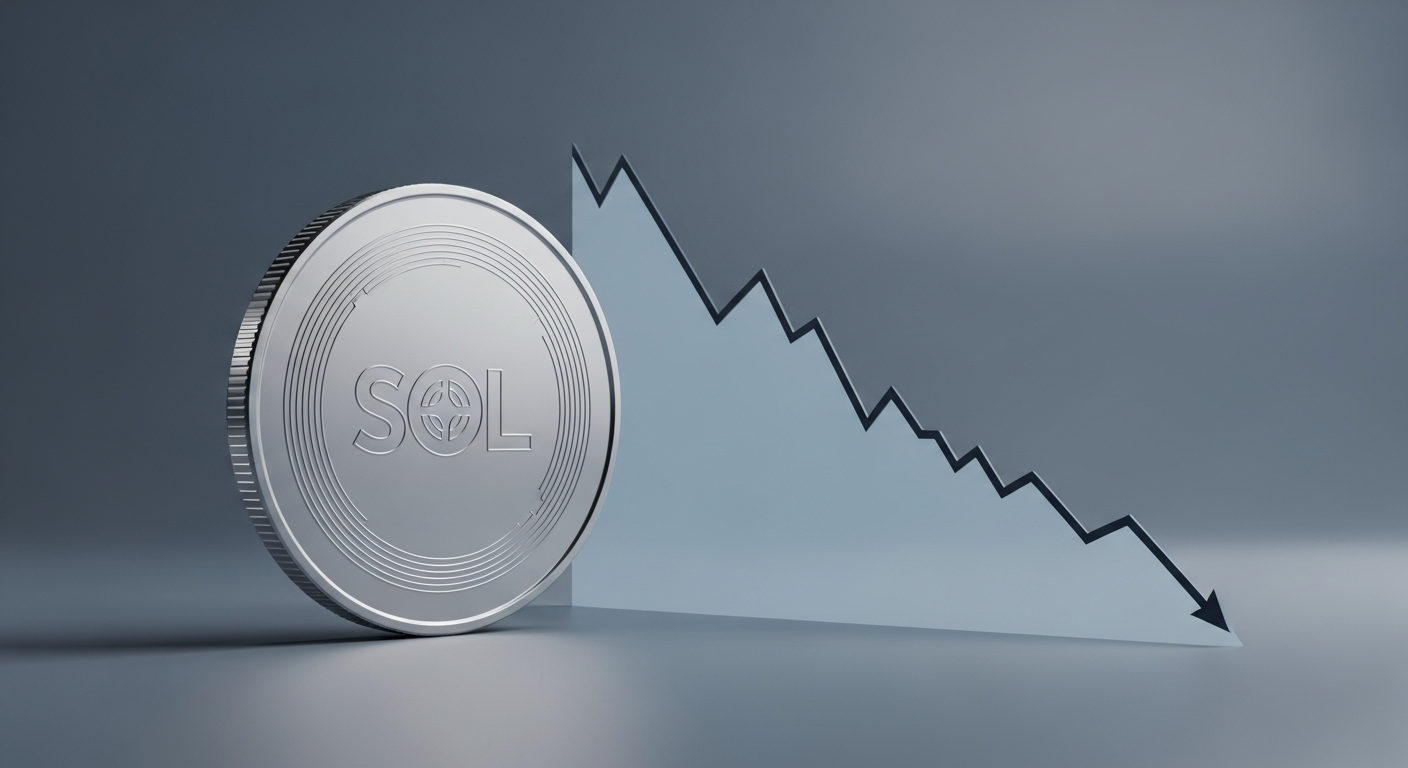
Solana tends to drop hardest when three things line up at once: broad crypto market weakness, leveraged long positions getting liquidated, and renewed doubts about network reliability resurfacing in the news cycle. It is rarely just one cause.
Solana’s higher volatility compared to Bitcoin means it often falls further and faster during a market-wide pullback, not because something is uniquely broken, but because it carries more risk premium to begin with.
Market-wide pressure hits Solana harder
When the broader crypto market turns risk-off, capital tends to rotate out of higher-beta assets like Solana first, back toward Bitcoin or stablecoins. This is the same dynamic behind most sharp single-day altcoin drops.
Our explainer on why crypto is crashing today covers the market-wide triggers that usually set this kind of move in motion before any single coin reacts.
Leverage unwinds accelerate the fall
Solana has a large base of leveraged traders on perpetual futures, and a moderate price dip can trigger a cascade of forced liquidations that push the price down much further than the initial move would suggest. Each liquidation becomes a market sell order, adding pressure on top of pressure.
This mechanic is not unique to Solana, but its trading volume and popularity among leveraged traders make these cascades especially visible when they happen.
Network concerns still shape sentiment
Solana’s history of past network outages means that any hint of instability, even unrelated technical chatter, can spook traders faster than it would for a network with a cleaner uptime record. Perception here often moves faster than the actual facts.
Comparing that reputational sensitivity to a similar pattern is useful, and our piece on why XRP is dropping shows how a coin’s specific baggage, in that case regulatory rather than technical, shapes how hard it falls during weak markets.
Correlation with Bitcoin still dominates
Solana rarely moves independently of Bitcoin for long. When BTC drops meaningfully, altcoins including Solana typically fall by a larger percentage, since traders treat them as higher-risk bets during uncertain conditions.
If you are tracking the exact numbers rather than just sentiment, our live SOL to USD price converter is the more reliable source than headlines during a fast-moving session.
Reading a drop without overreacting
Check whether the drop is Solana-specific or affecting the whole altcoin market, and check funding rates for signs of a leverage flush rather than fundamental selling. A drop driven mostly by liquidations tends to stabilize faster than one driven by genuine loss of confidence.
None of this is financial advice or a price prediction. Treat any single day’s move as one data point, not the full story.
Frequently asked questions
Is Solana dropping because of a specific network problem?
Not always. Sometimes it is pure market-wide weakness or leverage unwinds with no actual network issue involved. Solana’s history of past outages just makes traders quicker to assume a technical cause.
Does Solana always fall harder than Bitcoin during a downturn?
Generally, yes, since it is treated as a higher-risk, higher-beta asset. Altcoins as a category tend to see amplified moves, both up and down, relative to Bitcoin.
How can I tell if a Solana drop is a temporary liquidation event?
Watch funding rates and open interest. A sharp drop paired with a rapid drop in open interest usually signals a leverage flush rather than a fundamental shift in sentiment.